Oral Preventive EFDA
A Positive Community Impact
Understaffed dental practices lead to underserved communities.
In a state where patients are waiting many months for care and dental practices are struggling to staff enough providers, the Oral Preventive Assistant (OPA) EFDA certification is an efficient solution to multiple systemic challenges to help improve Missouri dental care and workforce efficiency.
What, Who, How
What is an OPA?
An Oral Preventive Assistant (OPA) is a type of Expanded Function Dental Assistant (EFDA) who is specifically trained in scaling teeth on healthy patients to assist dentists and hygienists in providing routine preventive care. As an assistant, OPAs provide care under the direct supervision of a dentist or hygienist.
What is scaling?
Scaling is the removal of hard build up from the visible tooth. OPAs may provide this care to patients diagnosed as healthy by a dentist.
Who can become an OPA?
An OPA indication would be one of six Expanded Functions certifications available to dental assistants.
There are currently five other Expanded Functions Dental Assistant (EFDA) certifications that exist. The MDA originated this training program that has been helping increase dental practice efficiency since 1998.
How does the education work?
The OPA must complete the OPA training curriculum, which is a Missouri Dental Board-approved course. After which, there is hands-on clinical training with mentoring and guidance from dentists and hygienists. Once the didactic and clinical training are completed successfully, they must pass the OPA certification exam and receive a permit from the Missouri Dental Board before they are authorized to provide care under the direct supervision of a dentist or hygienist.
Improving Access
Rural clinics especially feel the pain of increased patient wait times, many noting 3-9 months (or longer) for basic preventive services.
Because dentists and hygienists are currently responsible for preventive care in addition to their top-of-scope procedures, Missouri dental practices are in a constant state of catch-22: Prioritize preventive care and let more serious conditions progress OR treat complex cases first and risk healthy patients developing more advanced afflictions.
It’s a difficult balancing act for clinics, which negatively impacts the oral health of our communities.
OPAs can help restore balance and alleviate wait times by assisting with preventive services — opening appointments for patients who require care from dentists and hygienists, working at the top of their scopes of practice, to address more difficult dental needs.
Boosting Workforce Efficiency
By upskilling current team members to OPAs, dental practices can treat more patients and help more people during a time fraught with hiring difficulty, especially when it comes to hygienists.
Recent shortage maps and increased dental assistant efforts make it clear that when teams need to grow, hiring and training dental assistants and Expanded Functions Dental Assistants (EFDA) is often a more realistic option than recruiting dentists or hygienists.
These new hires can be put through the OPA certification program to help support the needs of understaffed dental practices in a time-efficient and cost-effective manner — giving the dental workforce a much-needed infusion of preventive care personnel without compromising quality of care.
OPA programs in Illinois, Kansas and the U.S. military are proof of this concept. These upskilled dental assistants are already offering relief to dental teams with no adverse incidents on record.
Supporting Economies with OPAs
The integration of OPAs has implications beyond dental care access and daily productivity. When more patients are seen and dentists and hygienists can work top-of-scope, local and state economies see the impact. Dentists contributed $7,145 million to Missouri’s economy in 2022 alone. Adding the clinical support of OPAs drives unseen potential for these contributions and more.
Here's how it all comes together ...
OPA Drives Earning Potential
Continued education and skills training elevate any profession. Dental assistants with EFDA certifications already earn an average of $2.67 more per hour than those without. With the OPA certification, expanded functions dental assistants will be able to bring additional value that merits a higher salary — building financial security and encouraging freer use of funds within the community.
OPA Reduces Lost Patient Time & Wages
OPAs allow practices to treat more patients. Delegation of preventive care not only improves our state’s oral health, but also reduces patients’ need to disrupt work or school days for urgent and emergency oral care — a blight that costs the US an estimated $45 billion each year and disproportionately affects rural citizens and those identifying as female or Hispanic.
OPA Increases Dental Practice Productivity
As little as a 20% increase in delegation of procedures to an EFDA has been seen to increase productive capacity by 12.9% — a direct measurement of possible patient visits. The potential only increases with the addition of OPAs. The more patients each practice can see, the more revenue each practice can generate. For our independently owned clinics especially, this unlocks the opportunity to impact local and state economies like never before.
Scope & Curriculum
For a brief overview of the OPA EFDA concept, including scope and curriculum, see below.
Pilot Study Summary
In April 2023, the Missouri Dental Board passed the allowance of an Oral Preventive Assistant Pilot Project coordinated by the Missouri Department of Health and Senior Services (DHSS) Office of Dental Health (ODH).
The pilot project examined the use of an Oral Preventive Assistant (OPA) Expanded Function Dental Assistant (EFDA) (herein referred to as OPA EFDA) to deliver preventive care, including supragingival scaling limited to patients who are diagnosed as periodontally healthy or with gingivitis. The pilot was completed October 2025.
The results of the pilot project were reported in December 2025 to DHSS through ODH and other oral healthcare stakeholders in the state.
Creating an OPA EFDA position would build on the proven approach of allowing dental assistants, under direct supervision, to assist with restorative, orthodontic, and fixed prosthetic and removable prosthetic care. All OPA EFDA candidates would be required to satisfy the same prerequisite as other assistants wanting to pursue EFDA certification, and must successfully complete all online learning, including module quizzes, prior to matriculation into clinical training.
We have many doctors and assistants inquiring with the MDA if the OPA is law in Missouri and therefore, care can be delegated.
So there is no misunderstanding, it must be re-stated this was a pilot project that has now concluded. While the project project showed safety and efficacy, this new type of EFDA and the related delegable procedures must still be offered for subsequent rule promulgation to allow new delegable duties (codified in law) for an OPA to work in a dental setting.
Scope Summary
If passed into law, dental assistants who successfully become OPA EFDA permitted would assist dentists and hygienists (under direct supervision) with:
- Documenting periodontal probe readings and bleeding spots.
- Supragingival scaling, limited to patients diagnosed as periodontally healthy or with gingivitis.
By performing these and other clinical skills that alleviate the simpler but time-consuming tasks typically associated with a hygienist’s daily workflow, the goal of an OPA EFDA is to allow dental hygienists (and dentists) the time necessary to practice at the top of their scopes to provide care.
Curriculum Summary
The OPA EFDA curriculum is a comprehensive suite of educational modules. The opening modules will require assistants to review and re-acquaint themselves with fundamental principles. The subsequent modules will prepare assistants for the delegable functions with required hands-on clinical sessions and competency exams. Some modules (such as Modules 10-11) offer additional education and training on procedures already delegable to all dental assistants (no EFDA certification required).
- Introductory Modules – Overview/Introduction; Infection Control; Patient Positioning
- Module 1 – Anatomy, Physiology and Morphology
- Module 2 – Periodontal Etiology and Classification
- Module 3 – Armamentarium
- Module 4 – Maintenance and Sterilization
- Module 5 – Oral Hygiene Instructions
- Module 6 – Patient Assessment and Data Collection
- Module 7 – Imaging & Evaluation
- Module 8 – Using a Periodontal Probe, Principles & Techniques (proposed delegable functions)
- Initial diagnostic periodontal probing depth and bleeding spot recording.
- Recall periodontal probing depth and bleeding spot recording on patients who have been classified healthy or with gingivitis.
- Module 9 – Supragingival Scaling (proposed delegable functions)
- Use supragingival hand and ultrasonic scalers on healthy or gingivitis patients.
- Initial supragingival gross debridement in preparation for periodontal evaluation.
- Module 10 – Coronal Polishing
- Module 11 – Placement of Sealants and Application of Fluoride Varnish and Silver Diamine Fluoride
Pilot Study Outcomes
The Problem We're Trying to Address: Workforce Shortages Cause Poor Access to Care
Missouri has an oral healthcare workforce shortage that has most severely impacts rural clinics and clinics serving Medicaid patients. This is a long-standing problem resulting in unacceptably long wait times for appointments and poor access to care.
The State Office of Dental Health (ODH) within the Missouri Department of Health and Senior Services used license and permit data to determine where providers are located and where they are needed, as indicated by these Missouri provider distribution maps demonstrating workforce shortage areas by county.
Pilot Study Explored Potential Workforce Solution
To help address these challenges, the Oral Preventive Expanded Function Dental Assistant (OPA EFDA) pilot project — a collaboration of ODH, the Missouri Dental Board, and the Missouri Dental Association — was carefully designed to implement to evaluate how this healthcare worker might contribute in Missouri. The following sections summarize what the study examined, what the evidence shows, and why the findings matter for Missouri patients, providers, and policymakers.
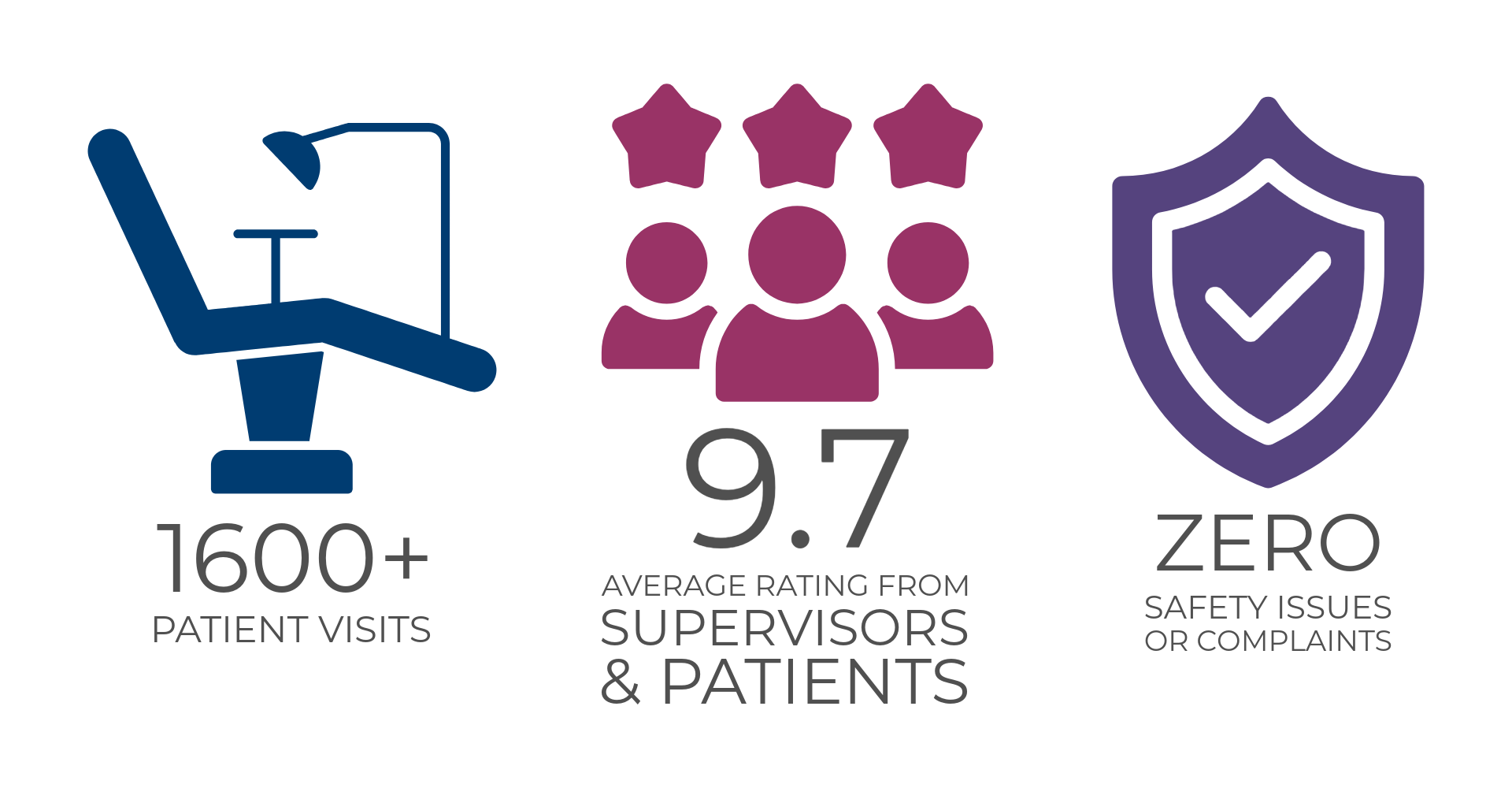
Results at a Glance
- More than 1,600 patient visits observed
- 9.6 / 10 average clinical performance rating from supervisors
- 9.8 / 10 average patient satisfaction rating
- Zero adverse events or complaints
Why This Matters for Missouri
Missouri’s oral healthcare workforce challenges are not theoretical. They are most acute in:
- Rural communities
- Clinics serving Medicaid-eligible patients
- Practices experiencing extended wait times for routine preventive care
This pilot project provides Missouri-specific, evidence-based insight into one potential approach for supporting access to care — while maintaining safety, supervision, and professional standards.
What This Study Did
Missouri conducted a state-authorized pilot project to evaluate the safety, quality, and patient experience of OPA EFDAs providing preventive care under the supervision of dentists and dental hygienists.
The project was carried out in real-world Missouri dental clinics, overseen by state agencies, and approved by an independent, federally certified Institutional Review Board (IRB) to ensure patient safety, study integrity, and appropriate controls.
What the Study Found
The training curriculum for OPA EFDAs produced excellent results.
Patients actually rated OPA EFDA care slightly higher than doctors and hygienists. Doctors evaluated OPA EFDA clinical performance as "Excellent/Exceptional; Strongly exceeds expectations."
Clinics able to use OPA EFDAs in deployment rates even as low as 5-10% of patient appointments increased their service capacity, particularly in areas of new patient access, without adding additional staffing.
The evidence from this pilot is clear and consistent:
- OPA EFDAs delivered safe, high-quality preventive care within the proposed scope
- Patients rated their care as highly as care provided by dentists and hygienists
- Clinical supervisors consistently rated OPA EFDA performance as excellent
- No adverse incidents or patient complaints occurred during the study period
What This Means — and What It Doesn’t
What this study demonstrates:
- OPA EFDAs can safely assist with preventive care when properly trained and supervised
- The role supports dentists and hygienists by improving team efficiency and allowing licensed providers to practice at the top of their scope and focus on more complex patient needs
- Even with limited deployment, clinics experienced measurable gains in capacity, particularly for routine preventive services
What this study was not designed to do:
- Measure full statewide capacity changes or workforce impact
- Evaluate outcomes associated with full-time OPA EFDA utilization
- Test the OPA EFDA role as a substitute for any licensed dental professional
What can reasonably be inferred:
This pilot intentionally deployed OPA-EFDAs in a controlled and limited manner to ensure patient safety, appropriate supervision, and reliable evaluation of clinical performance. Participation was restricted to existing clinic staff, and OPA-EFDAs provided care only for specific patient populations and procedures defined by the study—conditions designed to test safety and effectiveness, not full utilization.
Even within these constraints, the study generated sufficient clinical and operational data to assess outcomes. Additionally, dental workforce literature suggests that, under broader deployment, OPA EFDAs could reasonably be involved in 21%–33% of appointments. Notably, clinics in the pilot with higher OPA EFDA deployment levels demonstrated measurable capacity gains, consistent with prior studies showing improved service delivery and access to care.
Taken together, while this study was not designed to measure statewide impact, the results support the reasonable assumption that broader, less restricted deployment of OPA EFDAs could positively affect clinic capacity and access. The pilot’s structured training, supervision, and curriculum also provide a strong foundation for scalable implementation.
Voices from the Pilot Project
The full report includes extensive verbatim feedback; selected excerpts are shared here as representative examples.
While quantitative data establishes safety and quality, the lived experiences of patients, clinicians, and care team members help illustrate how the OPA EFDA role functioned in real-world settings during the pilot.
- “I just wanted to thank whoever is involved for starting this project so I don’t have to wait so long for my dental appointments. I was only getting in every year to year-and-a-half because my office lost their hygienist. Now I’m back on schedule — and the care has been excellent.” — OPA Patient
- "Wonderful. My son has autism, and the care was handled with such professionalism and patience. He didn’t get upset at all.” — OPA Patient
- “Being part of this pilot highlighted how much responsibility and care this role requires. The training strengthened my skills, my confidence, and my understanding of how to deliver preventive care safely and professionally under supervision. I’m proud of the standard of care we were able to provide.” — OPA EFDA Participant
- “Patient satisfaction was excellent, and the clinical skills demonstrated — including accuracy, professionalism, and patient communication — met high standards. The OPA EFDA role helped our care team function more efficiently while keeping appropriate oversight and clinical judgment with the dentist.” — OPA Clinic Supervisor
- “The OPA is helpful, but it is not a substitute for a hygienist. It helps keep healthy patients healthy while allowing the rest of the care team to focus on patients who need more complex care.” — OPA Clinic Supervisor
A Longstanding Commitment to Workforce Solutions
The Missouri Dental Association has invested for years in strengthening the dental workforce through education, training, and thoughtful delegation—not as a short-term fix, but as a sustained strategy to support patients, practices, and the dental care team.
That commitment includes:
- A fully equipped, centralized clinical training center delivering consistent, dentist-led education
- Comprehensive training and exam preparation for expanded-function dental auxiliaries
- Expanded programs such as Nitrous Monitoring to address evolving training needs across the dental team
- Advocacy to support rule and statutory changes that strengthen the dental workforce
- Ongoing evaluation of workforce roles and scope-of-practice models to ensure dental teams can work effectively, efficiently, and safely
- Creation of sustainable models for dental hygiene education and collaborating with programs to efficiently increase class sizes
The OPA EFDA pilot reflects this broader, long-standing approach: responsible workforce development grounded in evidence, education, supervision, and patient protection.
Request Report
This page provides a high-level summary. The final, full report includes detailed methodology, clinical evaluations, patient and provider feedback, and comprehensive analysis. MDA member dentists may contact the MDA to request a copy of the report.